
The Commuter’s Paradox
There are few daily experiences as universal — or as stubborn — as the commute.
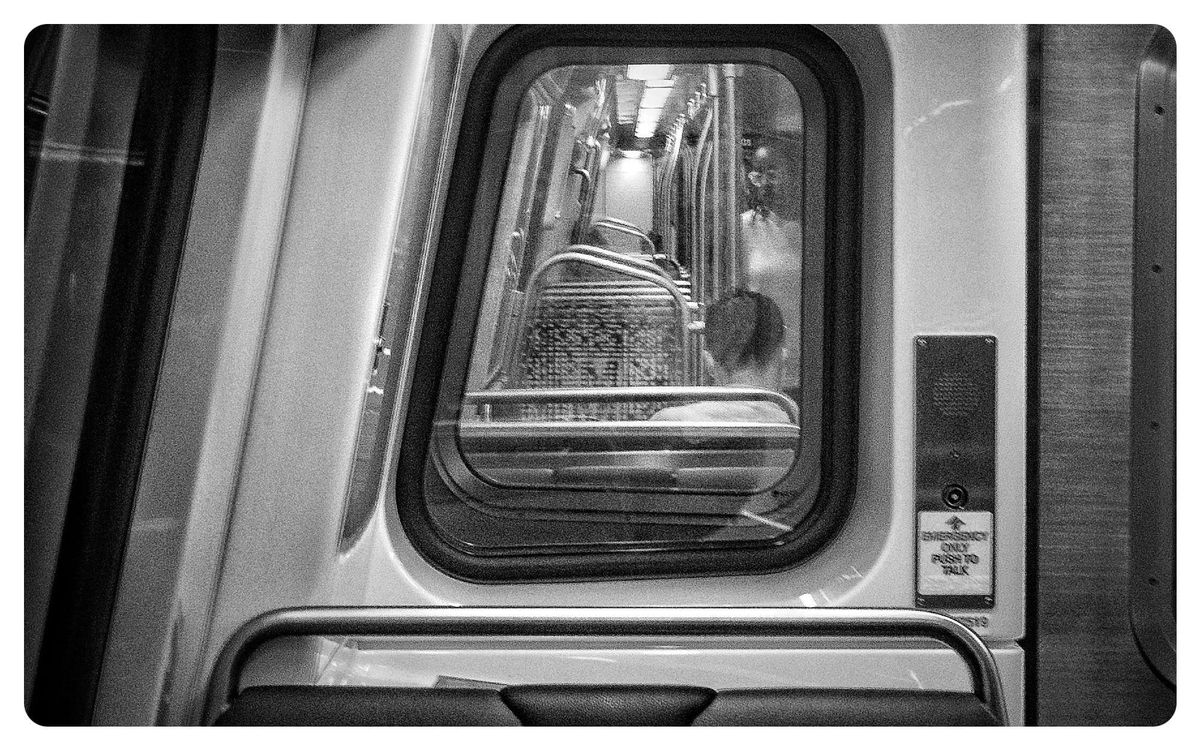
The Persistence of a Solved Problem
Commute times in major cities have remained remarkably stable for a very long time. Not across years, but across centuries. The average one-way journey to work — by foot, by horse, by rail, by car, by app-optimized ride — has clustered around thirty minutes for as far back as urban historians can reliably measure. The Italian physicist Cesare Marchetti documented this in 1994, observing that humans appear to maintain a roughly constant daily travel time budget of around one hour, redistributed as cities grow and transport speeds improve. Cities do not reduce commute times as they develop faster transport. They expand until the commute time is restored.
Marchetti's finding is counterintuitive enough to deserve a moment's pause. It means that the high-speed rail line, the new metro extension, the navigation app, and the ride-hailing platform are not, in aggregate, making commutes shorter. They are making it possible to live farther away while commuting for the same amount of time. The constraint is not technological. It is behavioral. And it has proven more durable than any infrastructure built to override it.
This is the commuter's paradox: a problem that attracts extraordinary sustained investment, genuine technological progress, and recurring policy ambition — and that produces, at the aggregate level, almost no change in the experience it is designed to address. The paradox is not that commuting is hard. Cities are complex, and movement through them has never been frictionless. The paradox is that improvement keeps arriving and relief does not — and that this gap between effort and outcome is not random or temporary. It follows a pattern.
What makes that pattern interesting is not what it says about infrastructure or technology. It is what it says about how problems get framed, where innovation chooses to intervene, and what "solving" a problem actually means when the system the problem lives in is designed to absorb solutions rather than yield to them.
A Complete Story That Doesn't Explain the Pattern
When outcomes fail to change, the instinct is to look for what is missing. In the case of commuting, the explanations are familiar and intuitively satisfying — and taken together, they form a narrative that feels complete without being sufficient.
The first explanation is scale. Cities are growing faster than infrastructure can keep up. London's population has grown by more than a million over the past two decades. Paris continues to absorb economic activity into its core. Berlin reports average commutes in the mid-thirty-minute range despite its reputation for livability. Athens has made chronic congestion a defining feature of daily life. More people moving into metropolitan centers stretches roads and transit systems beyond their intended capacity, and in this view congestion is simply the price of success — a structural consequence of the city working as intended.
The second explanation is behavioral. People make suboptimal choices. They commute at the same hours. They prioritize housing cost over proximity, family ties over flexibility, social continuity over rational relocation. In this framing, congestion is less a systemic failure than the aggregation of individual preferences that happen to conflict. Coordination is hard when millions of people act independently, and no infrastructure investment can fully substitute for choices freely made.
The third explanation is temporal. Electrification, new transit lines, and digital traffic management systems take time to deliver their full benefits. The argument is that we are in the middle of a long adjustment — one that will produce meaningful improvement once adoption crosses a critical threshold. Progress is real; it is simply incomplete.
Each of these explanations contains truth. Scale matters. Behavior matters. Transitions take time. The problem is not that any one of them is wrong. The problem is what the three of them, taken together, imply: that commuting is a known and understood problem, progressing toward resolution on a timeline longer than most politicians or investors would prefer, but moving in the right direction.
That implication is what makes the narrative appealing. It allows policymakers to justify continued investment, startups to pursue incremental innovation, and commuters to accept their daily routines as an unavoidable trade-off of modern urban life. It frames the problem as one of scale, patience, and gradual optimization — solvable in principle, delayed in practice.
But Marchetti's finding disrupts the comfort of that framing. If the standard explanations were sufficient — if commute times were long primarily because cities have grown, people have made suboptimal choices, and transitions are incomplete — the outcomes across different urban contexts would be more varied. A well-planned, moderately dense city with mature transit infrastructure and a high-income population making rational housing choices would produce measurably shorter commutes than a dense, underfunded, rapidly growing one. Sometimes it does. But not consistently, and not by the margin the explanations predict.
The convergence is too stable to be explained by what we are still waiting for.
If the explanations were sufficient, the outcomes would be more varied. They are not — and that gap between the explanatory power of the standard narrative and the empirical stability of the outcome is where the more interesting analysis begins.
The System That Absorbs Solutions
Over the past two decades, cities have invested heavily in interventions designed to improve mobility. New metro lines have opened in Paris, Madrid, and Copenhagen. London added the Elizabeth Line, one of the most ambitious transit projects in Europe. Ride-hailing platforms promised to reduce car ownership and smooth the edges of urban movement. Navigation apps now optimize routes in real time, dynamically redistributing traffic flows minute by minute. Measured in isolation, many of these interventions work. Travel speeds improve on specific corridors. Access expands to neighborhoods previously underserved by transit. Information asymmetries shrink.
And yet the average commuter's lived experience remains stubbornly familiar.
This is not a coincidence. It is the mechanism Marchetti identified operating at scale. When a city builds a faster train line, it does not produce a city of shorter commutes. It produces a city in which people are willing to live farther away — because the faster train makes the farther distance tolerable within the same time budget. The efficiency gain is real. It converts directly into expanded spatial reach, higher land values at the new periphery, and more dispersed economic activity. What it does not convert into is relief. The commute time is restored to its prior level by the expansion it enables.
The system adapts. Not metaphorically — structurally. Each solution that reduces friction at a specific point in the journey becomes the foundation for a new equilibrium in which slightly more friction is possible elsewhere. A faster train enables a more distant home. A navigation app makes a previously intolerable route manageable. Ride-hailing absorbs demand that might otherwise have pressured cities to rethink land use. Each intervention succeeds on its own terms and is absorbed by the larger system on the system's terms.
This explains a pattern that urban planners have documented for decades under the name of induced demand: new road capacity fills with new traffic, new transit capacity enables new development, and the net effect on congestion is smaller — often far smaller — than the investment justified. Induced demand is usually discussed as a problem of roads and highways, but Marchetti's finding suggests it is a more general property of the relationship between transport speed, urban form, and the time budget people are willing to allocate to commuting. It is not that roads cause congestion. It is that any improvement in transport access enables an expansion in the area people are willing to consider living in — and that expansion recreates the conditions the improvement was designed to relieve.
A commuter in Amsterdam may travel fewer kilometers than one in Los Angeles, but both often report comparable time pressure. A subway rider in Tokyo experiences a different mode of congestion than a driver in São Paulo, yet the sense of compression — of time spent in transit rather than at destination — is remarkably consistent across contexts. What changes is the configuration of the journey, not its burden.
This is what it looks like when a system absorbs solutions rather than yielding to them. Progress keeps arriving. The experience it was designed to improve keeps reconstituting itself at a new scale. The problem is not mismanaged. It is structurally self-restoring — and the interventions that address it most visibly are often the ones that restore it most efficiently.
Optimizing for the Wrong Dimension
Most attempts to improve commuting begin with an implicit assumption: that the core problem is inefficiency. Commutes are too long. Roads are too congested. Trains are too crowded. Transfers are poorly coordinated. If movement could be made faster, smoother, or cheaper, the burden would ease. This assumption feels reasonable because it is observable and measurable. Time can be logged. Delays can be mapped. Infrastructure budgets can be justified with charts that show minutes saved per passenger.
But this framing quietly narrows the problem before it is understood.